Sunbeds and UV lamps ·
Sunbed acrylic panels and covers: cleaning and care
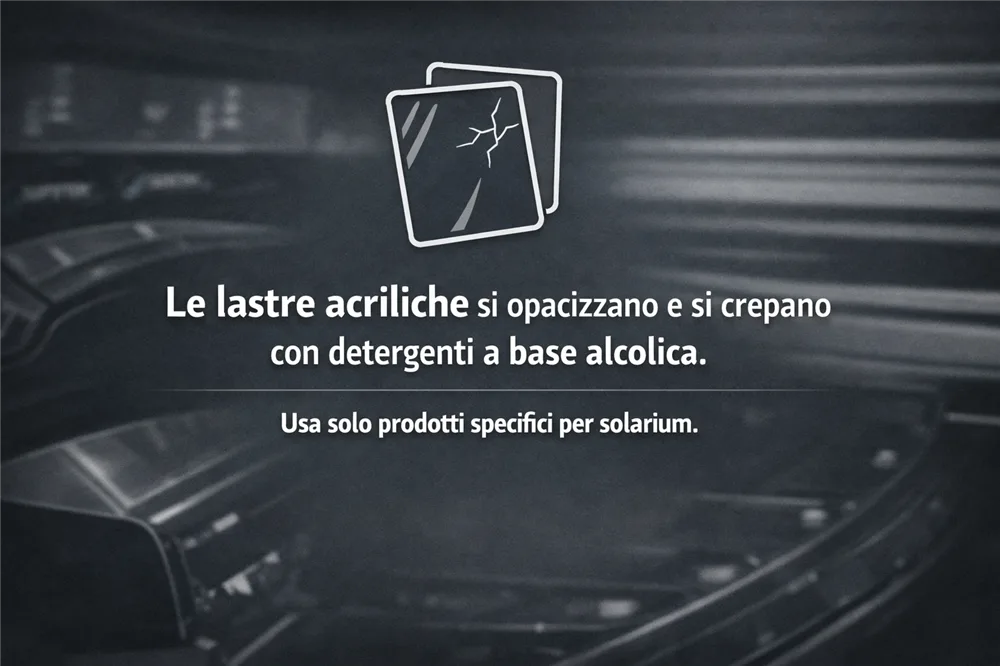
Sunbed covers and plastic panels are not damaged only by wear or pressure during use. Unsuitable cleaning products can also contribute to deterioration.
Alcohol-containing or aggressive cleaners can damage materials used in tanning equipment. Together with exposure to heat, UV and mechanical stress over time, unsuitable care can contribute to cracking. An already weakened cover may then break under pressure.
Choosing an appropriate cleaning method
To help prevent damage and avoid unnecessary replacements:
- Use cleaning and disinfection products approved for the particular sunbed and surface.
- For acrylic and plastic surfaces whose instructions exclude alcohol, use the specified alcohol-free products.
- Avoid aggressive sprays and solvents.
- Use soft, non-abrasive cloths and follow the prescribed cleaning method.
The absence of alcohol alone does not establish that a product is suitable. Check both the equipment instructions and the cleaner's directions, including dilution and contact time where relevant.
Acrylic panels need care too
Plastic covers are not the only parts that can deteriorate. The acrylic panels used in sunbeds can also become cloudy or develop fine cracks when exposed to incompatible cleaning agents.
Damage can affect surface condition and clarity and shorten the useful life of the panel. The original Italian article highlights alcohol-based products as a recurring problem; the appropriate cleaning regime must still be checked for the individual material and model.
Use products intended for the specified sunbed surfaces and follow the manufacturer's instructions. Do not apply one cleaning method indiscriminately to acrylic panels, UV filter glass and lamps: these are different components.
See also our guide to sunbed maintenance. For replacement UV lamp enquiries, the EU supply page explains which references to provide. A lamp enquiry does not establish the availability of a replacement acrylic panel or cover.